

In industrial safety, few roles are more misunderstood—or more casually assigned—than the Confined Space Entry Supervisor. Too often, the position is treated like a signature on a form instead of the most technically accountable role in the entire confined space process. Just recently, a GC’s EHS manager handed me a permit and said, “I can be the entry supervisor, or you can.” That shrug is the problem. The entry supervisor isn’t a clerical role. It’s a competency role—and lives depend on it.
Where My Standard Comes From
My understanding of confined space work began long before I founded Hux Safety Solutions. I was first certified by Connie Beasley in the early 1990s, before the state even had a formal program. Connie helped build the foundation for what would become the NCOSFM certification.
Years later, when the state offered a specialty certification, I enrolled in the series taught by Jason Dean in Clayton, NC. Jason had trained under Connie and helped write the state curriculum. Both Connie and Jason were instrumental in shaping North Carolina’s confined space rescue programs. They didn’t just teach confined space rescue — they helped develop the NC Technical Rescuer Confined Space (TR CS) programs that the state still uses today.
Jason became a friend and a mentor, and one thing he said has guided me ever since: “If something goes wrong in the confined space and you have to call somebody, you shouldn’t be the entry supervisor.”
That line is the backbone of this entire article.
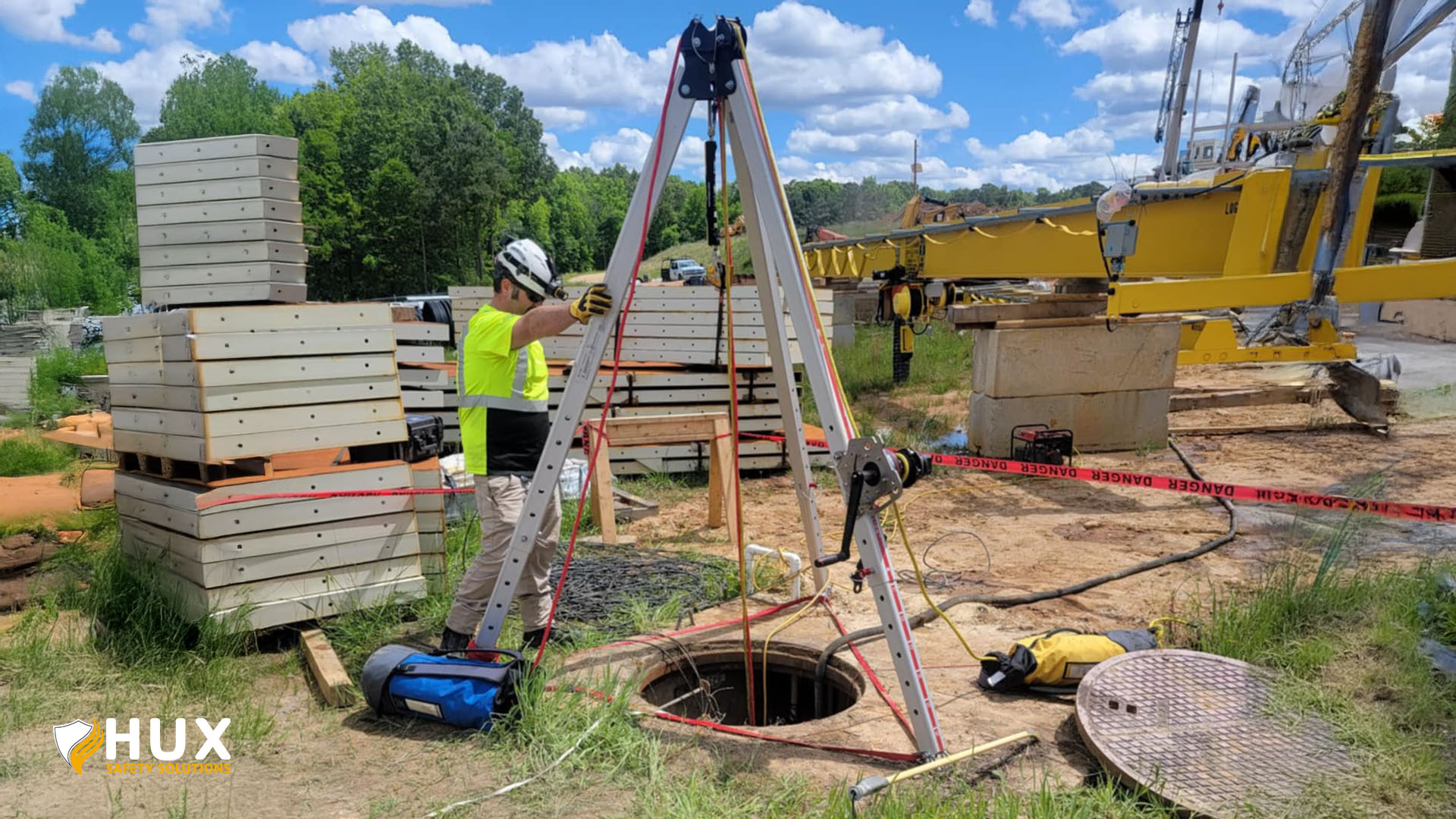
What OSHA 1910.146 and NFPA 350 Say — and What They Don’t
Both OSHA and NFPA define the duties of an entry supervisor, but neither defines the competence required to perform them.
OSHA 1910.146 (Permit-Required Confined Spaces)
OSHA assigns the entry supervisor responsibility for:
- Determining if acceptable entry conditions exist
- Authorizing entry
- Overseeing entry operations
- Terminating entry
NFPA 350 (Guide for Safe Confined Space Entry and Work)
NFPA emphasizes:
- Hazard evaluation
- Verification of isolation
- Ensuring controls are in place
These standards outline responsibilities, but they do not require the entry supervisor to:
- Understand the system
- Know the energy sources
- Recognize failure modes
- Know how to secure a valve
- Understand the equipment’s behavior
- Respond instantly without calling for help
And that gap is exactly where workers get hurt.
The Entry Supervisor Must Understand All Energy Sources
Confined spaces often contain multiple forms of hazardous energy. The entry supervisor must understand every one of them—not just valves or flow paths.
Mechanical Energy
Stored force in pumps, springs, rotating equipment, and suspended loads.
Hydraulic Energy
Pressurized lines, rams, lift systems, water mains.
Pneumatic Energy
Air lines, actuators, pressurized tanks.
Electrical Energy
Live conductors, control circuits, residual charge.
Thermal Energy
Steam, hot surfaces, heat exchangers.
Chemical Energy
Reactions, off gassing, incompatible materials.
Gravity
Anything that can fall, shift, or collapse.
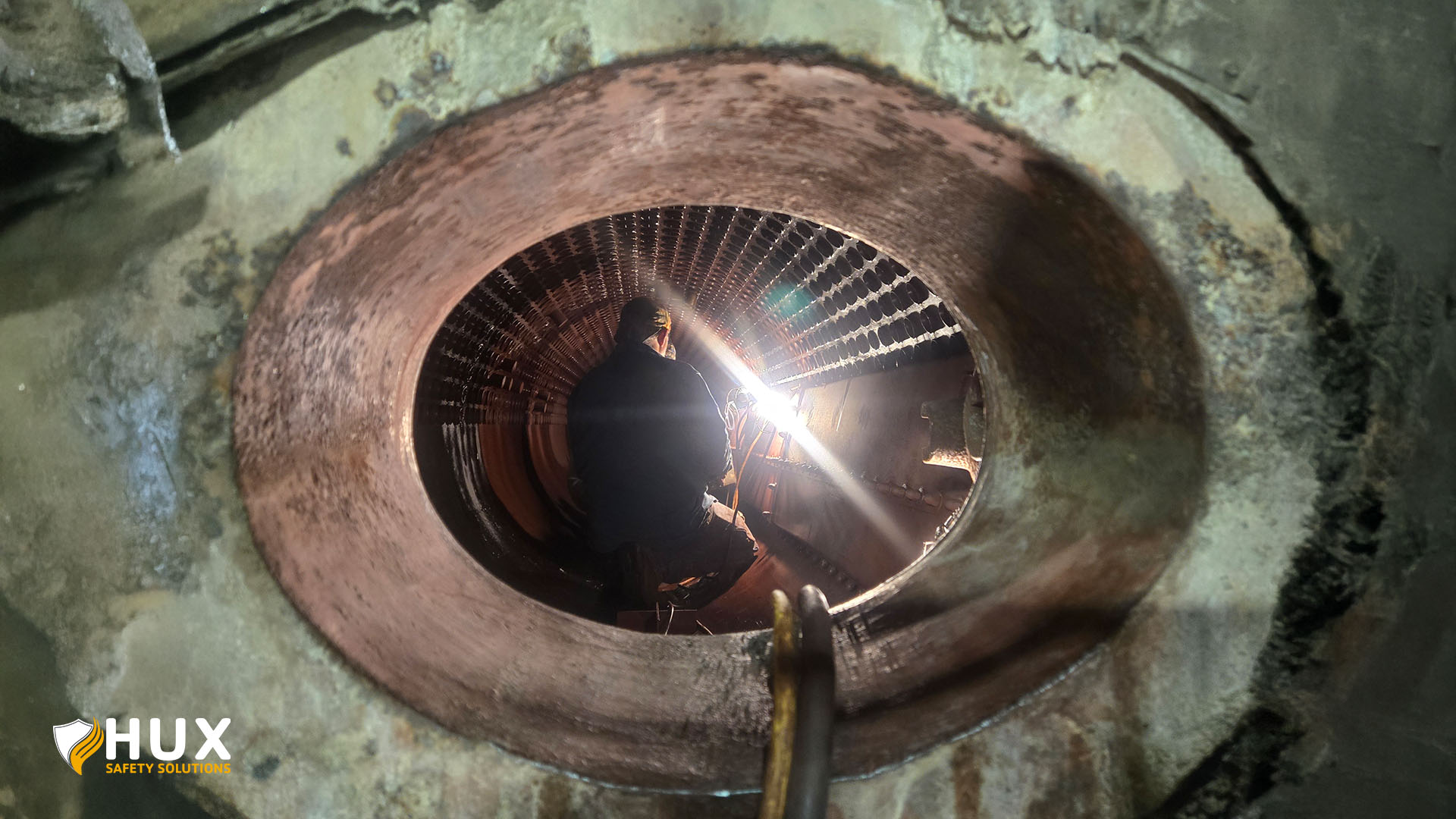
In a confined space, these energies don’t give warnings—they give consequences. And the entry supervisor must understand how each one behaves, how it is isolated, and how it fails.
A Real Incident: The Vault That Nearly Killed Two Electricians
Last year, two electricians entered a 12 foot deep underground lift station—about 200 square feet—to replace a decades old pump. The vault was over 30 years old. No drawings. No documentation. No one who truly understood the system.
They believed the water source was locked out. They believed the system was isolated. They believed the permit was accurate.
They were wrong.
What Happened Next
When they broke the last bolt on the pump flange:
- The motor launched upward and hit the ceiling, stored mechanical energy violently releasing.
- A 10-inch main began flooding the vault instantly.
- The first man reached the ladder with water at his waist.
- The second reached it with water at his chest.
- Both climbed out, soaked and lucky to be alive.
- Live 220 volt equipment was still energized in the space.
Their first words after escaping: “What happened to the LOTO?”
The answer: The lock was on the wrong isolation point.
The entry supervisor—an EHS manager—did not understand the system well enough to recognize any of this.
And the plant didn’t believe our team was necessary.
Why This Role Cannot Be Assigned Casually
This vault incident wasn’t a freak accident. It was the predictable outcome of a system nobody understood, being treated like a routine job.
The entry supervisor must be:
- The system owner
- The maintenance manager
- The person who knows the flow paths
- The person who knows the failure modes
- The person who knows what “safe” actually looks like
Not the GC. Not the EHS manager. Not the rescue team. Not anyone who has to “call somebody” when something goes wrong.
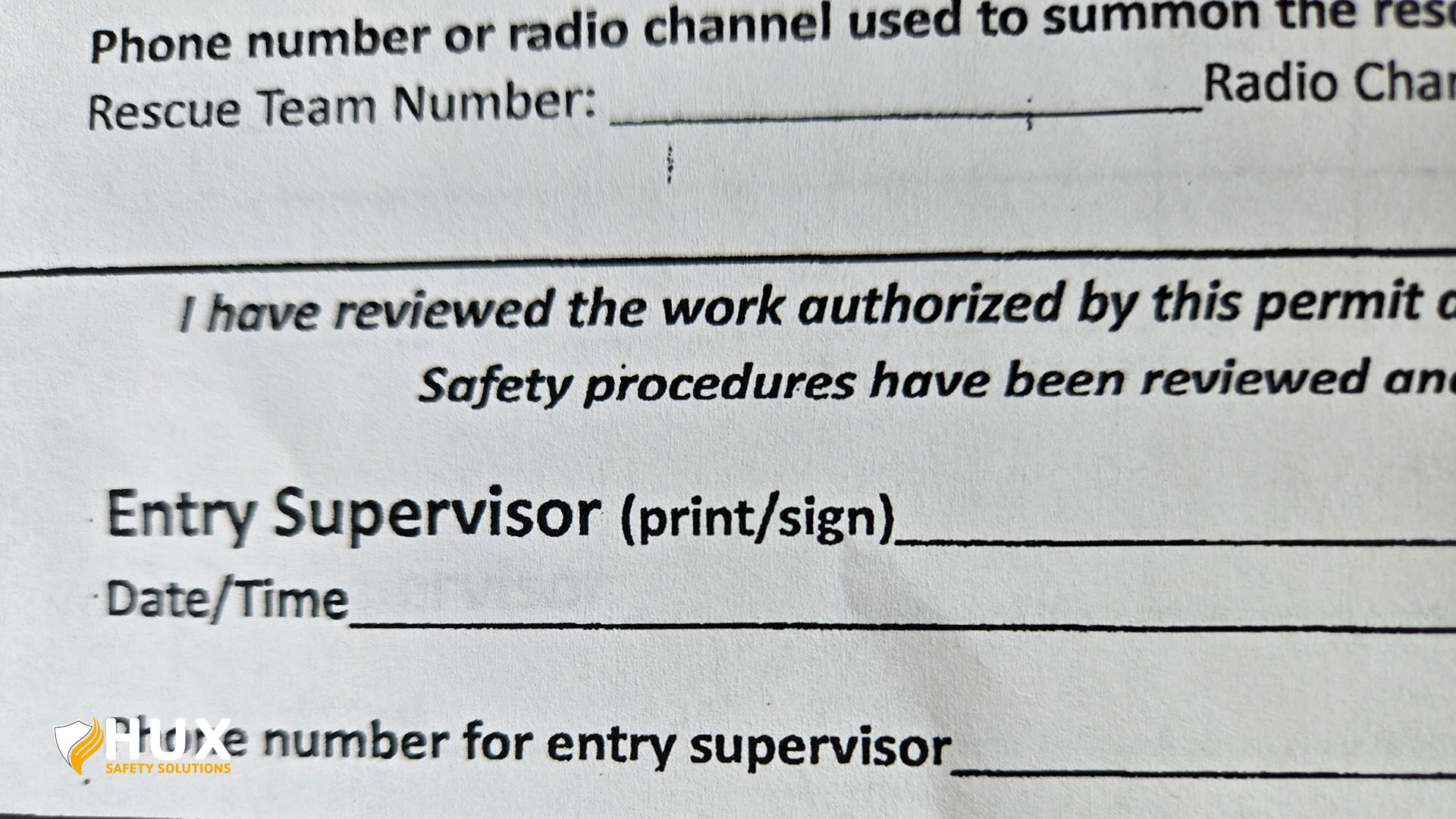
Why I Refuse to Be the Entry Supervisor for Systems I Don’t Understand
I know confined space management. I know rescue. I know LOTO. But I don’t know the inner workings of every system in every plant—and that’s exactly why I shouldn’t be the entry supervisor.
That’s not a limitation. That’s integrity.
The entry supervisor must be the person who can respond instantly, without hesitation, without guessing, and without calling for help.
Anything less is gambling with workers’ lives.
Carrying the Standard Forward
Connie taught the state how to build a confined space program. Jason taught me how to respect the role of the entry supervisor. I’m carrying their standard forward because workers deserve more than a signature—they deserve someone who knows the system well enough to protect them.
Until the industry stops treating the entry supervisor like a clerical role, we will keep seeing near misses like that vault.
Or worse.
Need help evaluating your confined space program? Our team specializes in system-based confined space analysis and rescue support. Contact us today.