
There’s a phrase I first heard in my twenties that has followed me through every chapter of my rescue and safety career:
“They don’t know what they don’t know.”
It landed on me hard the first time I heard it. Decades later, I see it every single week in industrial confined space work.
Most people in industry aren’t careless. They aren’t reckless. They aren’t ignoring hazards.
They’re doing exactly what they were taught. The problem is what they were taught came from a time when nobody had the full picture.
Let me show you what I mean.
A Lesson From the Roanoke River
In my twenties, I was a volunteer with the local rescue squad. Every year we handled swiftwater rescues on the Roanoke River — Class III water that most people in the state didn’t even know existed.
We didn’t know any better back then. We used flat‑bottom boats, wore turnout gear, and did the best we could with what we had.
When we reached out to Rescue 3 International, Trey Smith — a Rescue 3 instructor and Charlotte Fire captain — told us he needed Class III water for the class. I told him we had it. He didn’t believe me until he came out and saw it himself. That’s when he agreed to teach the course, and when I first met Jason Dean, who came with him to help teach.
During that class, Trey explained why so many firefighters had drowned in the 80s and 90s. They weren’t reckless or untrained — they were following the doctrine of the time:
“Every call, every time — put on full turnout gear.”
That made sense for structure fires, but in swiftwater it became an anchor. It trapped air, absorbed water, restricted movement, and made swimming nearly impossible.
Trey said something I’ve never forgotten:
“They drowned because they were following their training. They didn’t know what they didn’t know.”
That line became a lifelong lesson — and it’s the same pattern I see today in confined space work.
Connie’s Story: The Same Pattern in Confined Space Rescue
I first met Connie Beasley when I took my very first confined space rescue class. I didn’t know it at the time, but I was learning from one of the men who helped shape the entire discipline in North Carolina.
Before he ever became an instructor, Connie responded to a confined space fatality as a volunteer firefighter. The department had zero confined space training — not because they were negligent, but because the field was new and nobody had the resources or expertise yet.
The investigation that followed revealed a statewide knowledge gap. Big fines. Hard lessons.
Connie didn’t walk away from it. He built something from it.
He founded Triple C. He helped develop the NC Technical Rescuer Confined Space (TR CS) program. His reach extended up and down the East Coast — NASA, Ford, and others. Whether it was training or standby work, his influence was wide.
Connie has since passed away, but his legacy is foundational. He helped build the standard many of us still follow — and he personally started me on that path.
Jason’s Role — Carrying the Standard Forward
Jason trained under Connie. He helped write the state curriculum. He taught the specialty certification I later took in Clayton, NC. He became a friend and a mentor.
Jason also passed away during the COVID period, but his influence is still alive in every technician he trained.
And one thing he said has guided me ever since:
“If something goes wrong in the confined space and you have to call somebody, you shouldn’t be the entry supervisor.”
That line is the backbone of everything I teach today.
The Day Jason Came to See the Work for Himself
After I formed Hux, I kept Jason on speed dial. I called him regularly with questions about what I was seeing in industry. And I asked him — over and over — to come work a shift with me.
After several months, he finally said yes.
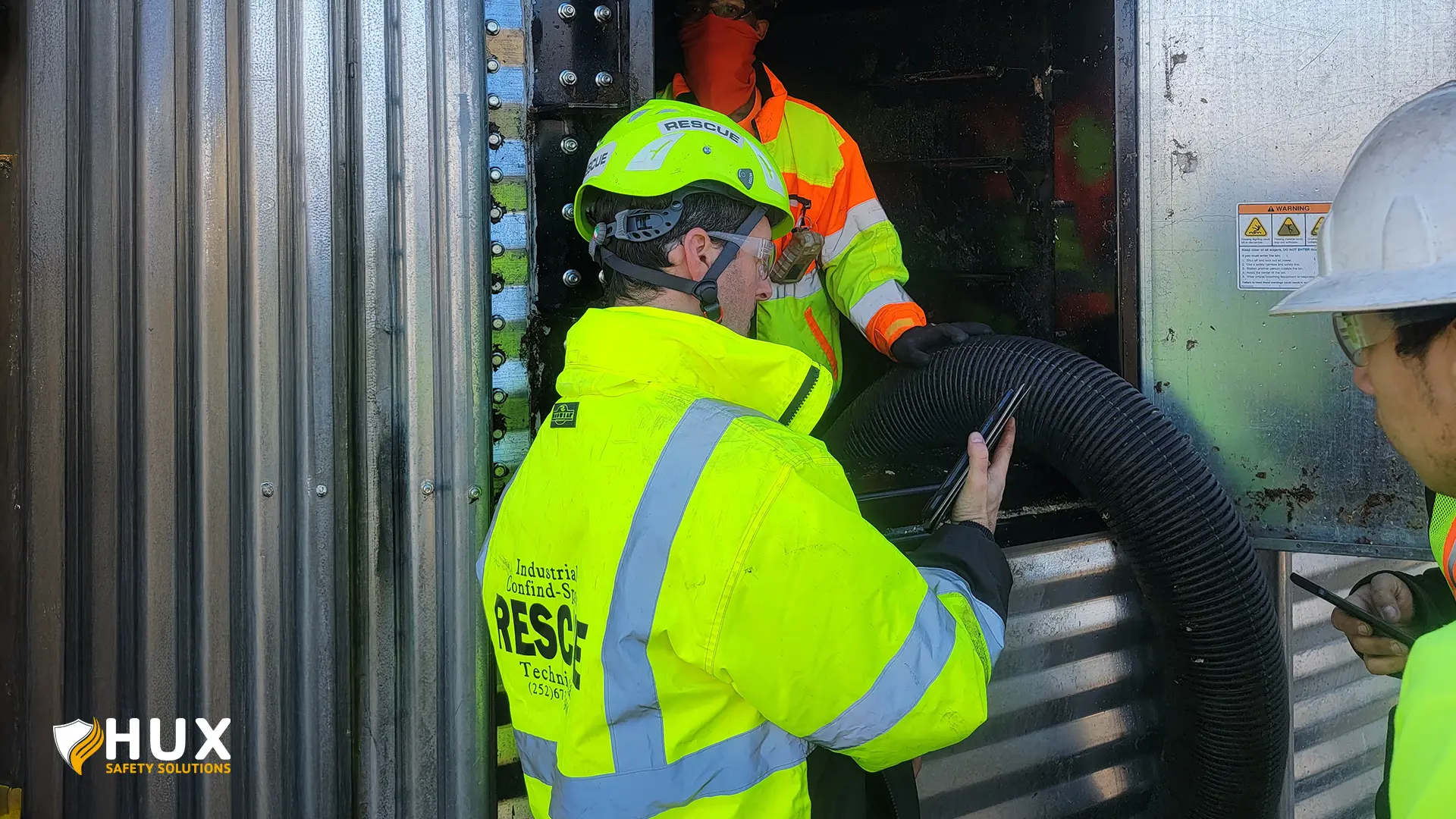
He came to a facility where we were providing confined space rescue and worked one full shift with me. I walked him through everything:
- LOTO
- Attendants
- Equipment
- Permits
- The proactive rescue plan
- The entire preventive rescue approach
At the end of the shift, he pulled me aside.
He told me he had worked with several standby crews over the years. He admitted he was nervous about what he might find. Then he said something I’ll never forget:
“What you’re doing here is great. I’m pleasantly surprised.”
Coming from Jason — one of the men who helped build the standard — that meant everything.
How We Got Here: The Generational Drift
When OSHA 1910.146 came out in the early 90s, companies didn’t have:
- Confined space experts
- Rescue teams
- Consultants
- System‑knowledge‑based entry supervisors
- NFPA 350
- Preventive rescue philosophies
So they did what they could. They built programs that met the new regulations as best they could with the limited resources they had.
Those early interpretations became policy. Policy became training. Training became culture. Culture became “the right way.”
And today’s workers inherit practices that were never updated.
Corporate Policies — The Hidden Problem
Many corporate confined space policies are 20–30 years old.
They still contain outdated interpretations like:
“If no hot work is performed, the space may be reclassified.”
Workers read these policies and believe they are correct. Supervisors enforce them with confidence. Entire organizations operate under outdated assumptions.
This isn’t negligence. It’s inheritance.
And it’s a massive opportunity for policy audits and modernization.
A Modern Example: A Large Power Generation Client
Recently, I was on a job for a large power generation client. They only required rescue for the mud drum and steam drum. All the intercostal spaces — 40 to 60 feet tall, restricted, potential for oxygen deficiency, working on scaffolding, impossible to self‑rescue from — were treated like routine work.
“No permit required,” they said. “As long as we aren’t doing hot work, it’s non‑permit.”
One of their senior guys — a respected mentor, around 60, retired but contracted back in because he’s trusted — was preparing his team to enter the intercostal space.
He services multiple plants. He is a culture carrier. His team believes what he believes.
I sent my guy to take an air reading. I told him:
“I know y’all don’t do a permit for this space, but I feel better at least checking the air.”
He said:
“Yeah, as long as we aren’t doing hot work, it’s not permit required.”
I told him:
“I understand how your company does things, and I’m not rocking the boat, but by regulation this is absolutely a PRCS.”
He said:
“Well, it’s a fine line.”
And I told him:
“The line isn’t fine — it’s defined.”
I didn’t challenge him. I didn’t embarrass him. I didn’t undermine him.
I planted a seed.
And because he’s respected — because younger workers look to him as the standard — that seed matters.
This is how generational drift happens. And this is how it gets corrected.
A Success Story: When a Company Chooses to Evolve
A few years ago, we began working with a manufacturing facility that initially believed only one or two spaces required rescue coverage.
They didn’t think several other spaces — including tall, restricted, or process‑connected spaces — needed rescue at all.
Sound familiar?
But this company did something important:
They listened.
We didn’t force it. We asked questions. We helped them see what they hadn’t been taught.
Then one day, a corporate EHS leader visited the site. He saw our team and walked straight over to me.
He said:
“This is exactly what I want to see.”
He carried that message to corporate. And it changed everything.
The company updated confined space practices across all their facilities. Slowly, steadily, the program improved. Today, that site has one of the strongest confined space programs we’ve seen — and we see a lot, with over 90 customers.
They are proof that companies can evolve when leadership is willing to learn.
It’s Time for a Reset
Confined space safety didn’t start with experts. It started with tragedy, improvisation, and limited resources.
But now?
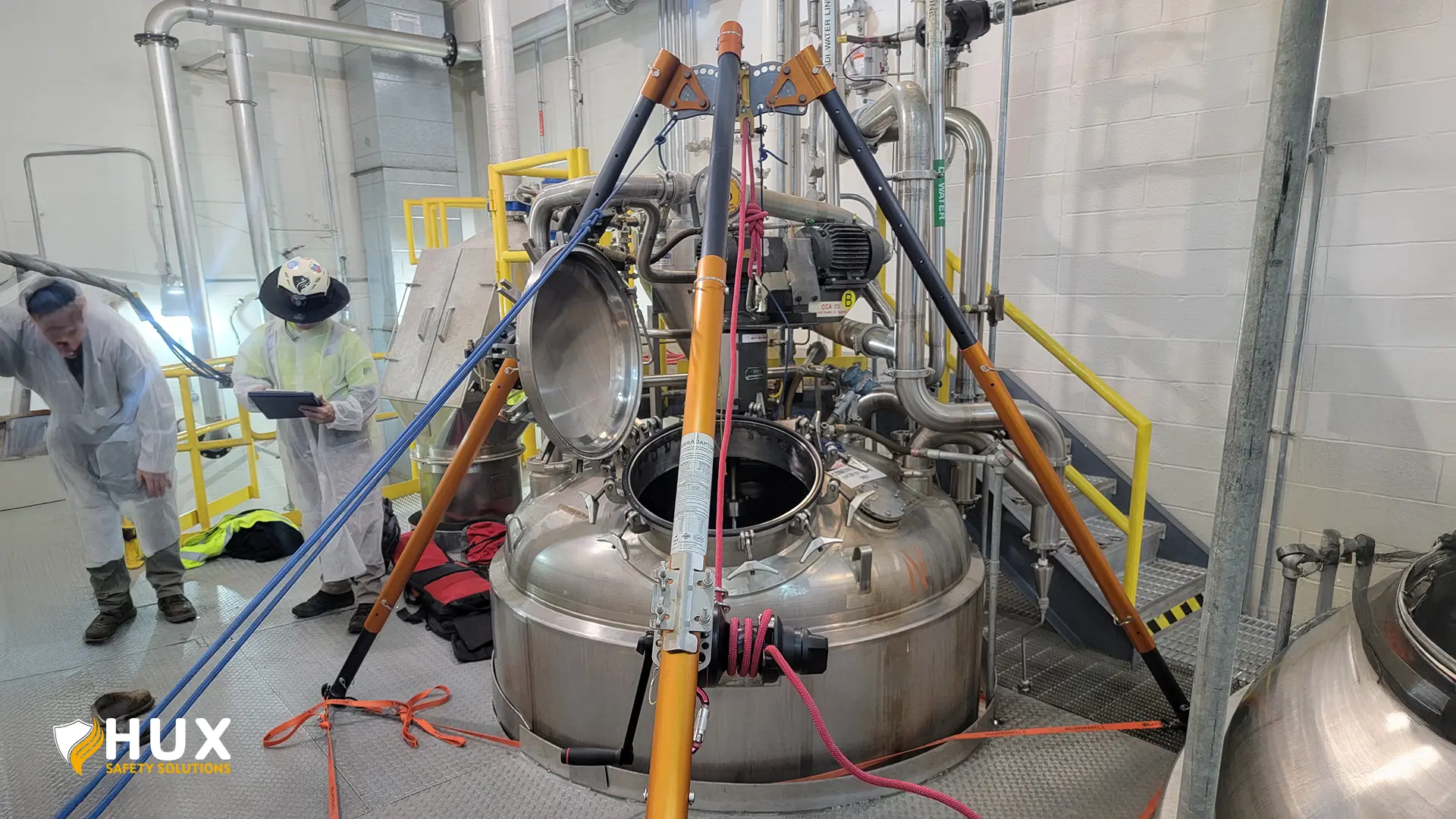
We have experts. We have decades of lessons. We have better training. We have better understanding. We have better tools. We have better rescue capabilities.
The only missing piece is the willingness to say:
“Maybe what we were taught isn’t the full picture.”
That’s not an admission of failure. It’s an act of leadership.
Connie and Jason built the foundation. I’m carrying their standard forward. And the next generation deserves better than inherited shortcuts.